

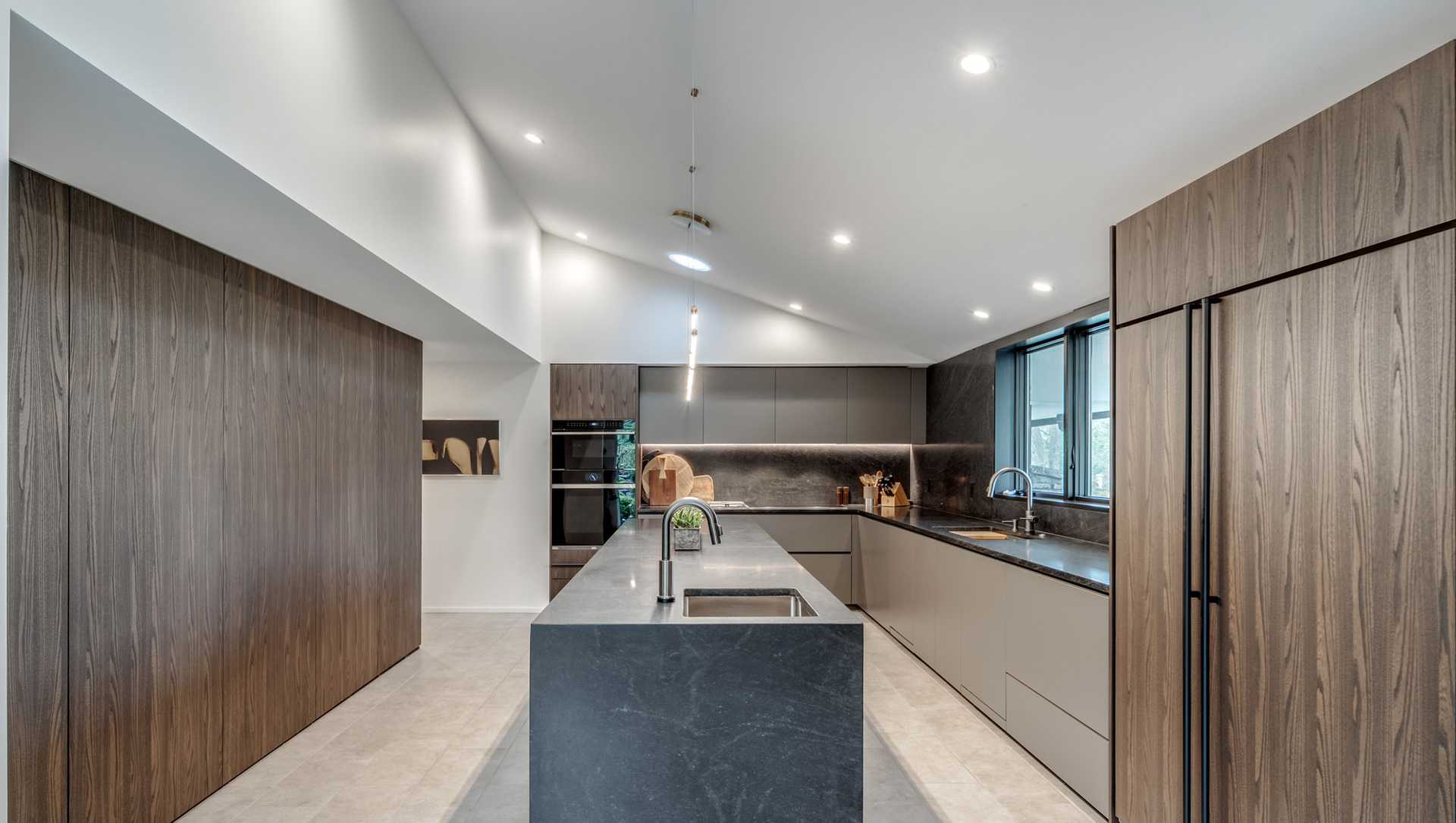
For decades, kitchen layouts have been shaped by rules that promised efficiency above all else. But today’s kitchens are no longer isolated work zones; they are social hubs, creative studios, and the true center of the home. At NOLI, we believe the best kitchen layouts are not dictated by rigid formulas, but by flow, intention, and how people actually move through space.
Think of the modern kitchen not as a triangle, but as a laboratory.
Kitchen Layouts: Old Rules vs. New Thinking
The old way: the kitchen work triangle.
This long-standing concept—connecting the sink, stove, and refrigerator—was developed with military efficiency in mind. It assumed a single cook, minimal movement, and a purely utilitarian space. While it worked for smaller, closed-off kitchens of the past, it often falls short in modern homes where kitchens are open, multifunctional, and shared.
The problem isn’t that the work triangle is “wrong,” it’s that it prioritizes efficiency over flow.
The new way: the kitchen laboratory
When planning a kitchen layout today, the more useful question isn’t How close are my appliances? but How does food actually move through this space? From the moment groceries enter the home to the final act of cleanup, a kitchen should support a fluid, intuitive sequence of actions.
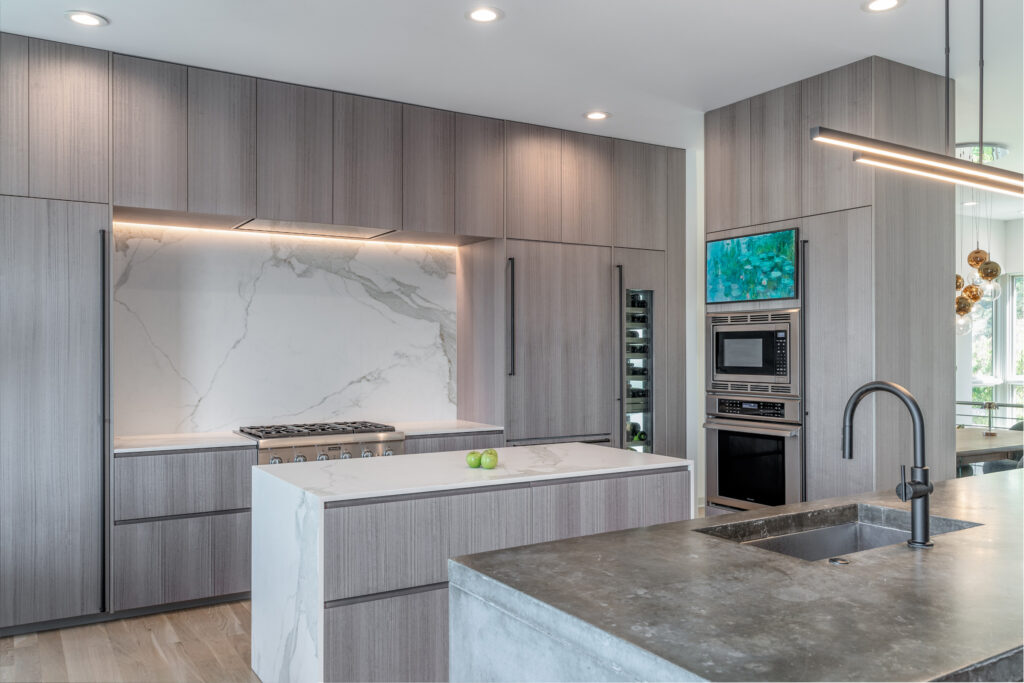
This is where the idea of the kitchen as a laboratory comes in.
Designing a Kitchen Layout Like a Laboratory
In a lab, nothing is random. Tools are placed where they’re needed, materials move through defined stages, and order supports creativity. The same thinking applies to thoughtful kitchen layout design.
At the core of this approach is the idea of “mise en place,” or “everything in its place,” where flow and function come first. Beauty follows.
When you design a kitchen layout from a technical and functional standpoint, it naturally dictates where appliances, fixtures, and storage should live. The result is a space that feels effortless to use and quietly beautiful.
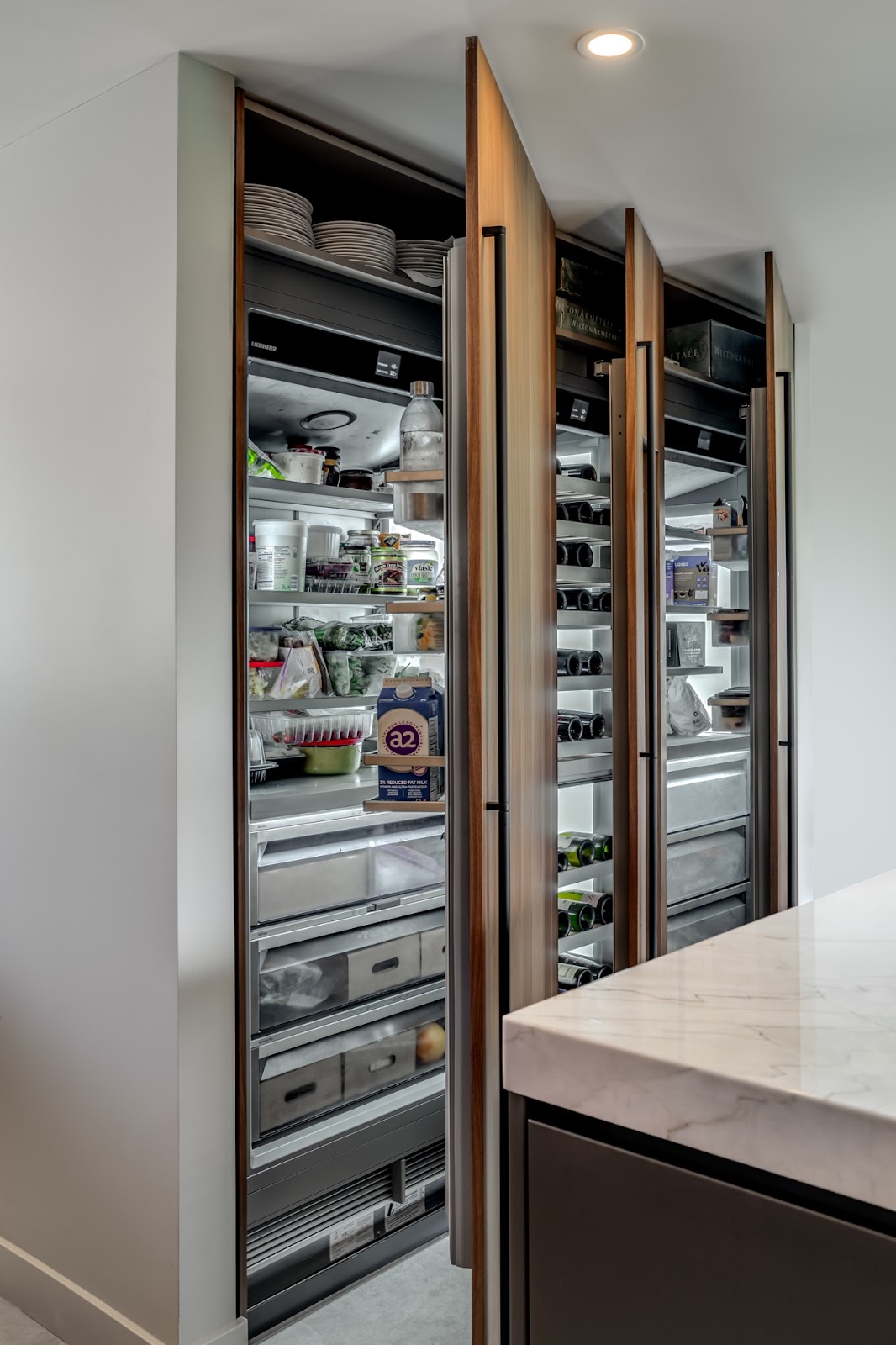
Step One: Storage (where your materials enter the space)
Every laboratory experiment begins with ‘raw’ materials (samples and reagents). In the kitchen, that means groceries. Ask yourself: Where do I enter the kitchen with my groceries? This is where your refrigerator, pantry, and bulk storage should be located. Cold storage and room-temperature storage should be grouped together and positioned near the point of entry to minimize friction. In a lab, this would be the area where samples and reagents are stored in a way that is clearly organized and easy to access.
Step Two: Preparation (setting up the experiment)
From material storage, the workflow should move seamlessly into prep. Your primary preparation areas—counter space, sink, and trash access —should sit immediately adjacent to storage. This allows ingredients to be unloaded, unpacked, washed and prepped with minimal back-and-forth. In our lab analogy, this is where materials are measured, combined, and made ready for experimentation.
Step Three: Cooking (conducting your experiment)
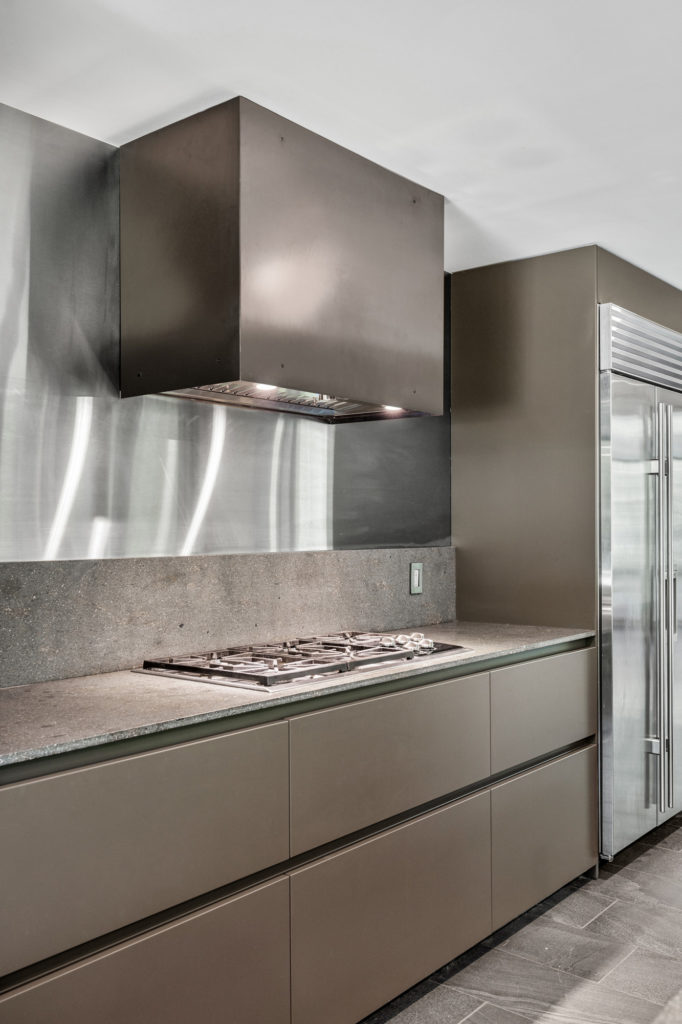
Next comes the active phase. Cooking zones should be designed as concentrated hubs, with all necessary appliances and tools close at hand. Ranges, ovens, ventilation, and specialty appliances are placed not for symmetry, but for use. When we’re thinking of the kitchen as a lab, this is where experiments happen. Here, precision is paramount, and everything needs to be within reach.
Step Four: Eating (Interpreting the results)
The kitchen doesn’t end with the cooktop. Sitting down and eating—whether at an island, a counter, or an adjacent dining area—is part of the workflow. This is where the results of cooking (the experiment) are enjoyed, assessed, and shared. The layout should allow for easy transition from cooking to gathering without interrupting circulation.
Step Five: Cleanup and Reset
In both laboratories and kitchens, the cleanup is as important as the cooking itself.
A well-designed kitchen layout creates a natural loop:
- Dishes move easily to the sink or dishwasher
- Clean tools return to storage without crossing prep or cooking zones
- Unused ingredients are quickly returned to their proper place

This circular workflow ensures the kitchen is always ready for the next experiment.
How to Plan a Kitchen Layout That Actually Works
Rather than forcing your kitchen into predefined rules, think in terms of process, flow, and use. When you design a kitchen layout like a laboratory, the space becomes intuitive, efficient, and deeply enjoyable to experience.
At NOLI, we specialize in kitchen layouts that balance technical precision with timeless design. If you’re ready to build a kitchen laboratory that’s as beautiful as it is functional, go to our contact page or stop by our Cincinnati showroom.

