

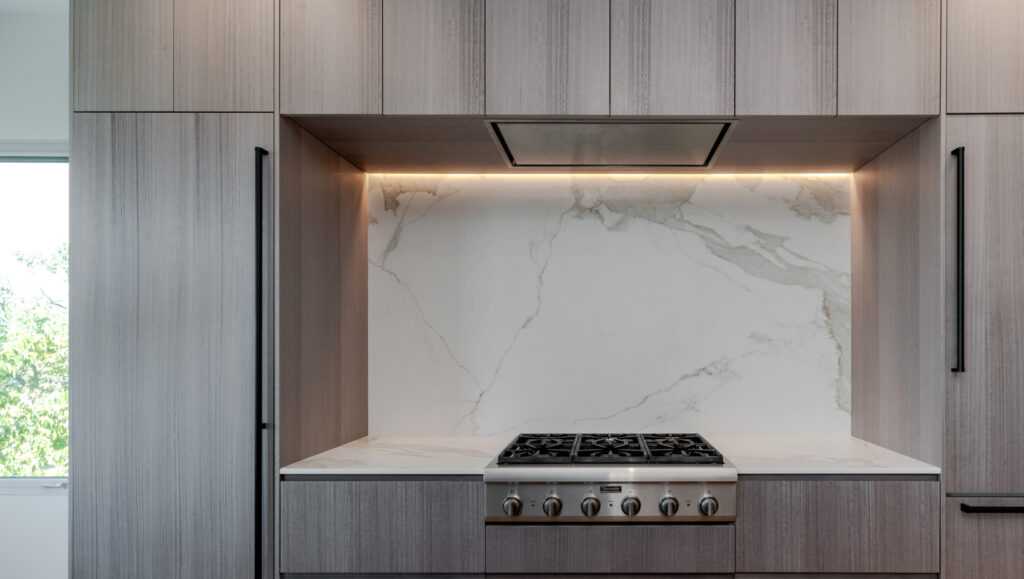
Prioritizing function without overpowering the space.
Here’s a classic dilemma per tutti: you need a kitchen hood to filter and vent out things like cooking grease and smoke (aka what a kitchen hood is for), but you don’t want a giant, unsightly hood vent cramping the style of your modern Italian kitchen. Looks like it’s time to…
Hide! That! Hood!
That’s right, with modern Italian design, you can have it all. And by “it all” we mean a kitchen that’s not full of smoke. With an integrated hood, you’ll get a sleek, elegant living space that’s not taken over by a massive steel appliance. Exciting, we know. But to achieve this look, you’re going to need to make a plan with your designer to build a kitchen hood where form meets function. That way, your hidden kitchen hood is integrated seamlessly into your modern kitchen design while still performing its essential duties.
But how?
That’s where built-in appliances come in 😉
In modern Italian design, we’re a little bit obsessed with hiding things, from hidden range hoods to hidden stove vents. Ideally, these hidden appliances work with the reality of your space and their function. This approach works wonders when it comes to kitchen hoods, hood vents, and range hoods, because while they are a necessity for your kitchen they don’t need to be the center of attention.
Because the modern Italian living space tends to combine the living, dining, and kitchen spaces into one open area, we need a kitchen that is designed to fit in and flow into all three spaces, not dominate the space with its kitchen-ness.
Take a look at this example from NOLI’s portfolio to get a better idea of what we’re talking about:
Hidden Hoods and the Modern Kitchen
When it comes to designing your modern Italian kitchen, we don’t want anything that’s too “in your face.” That means exiling the dreaded over-the-range microwave-hood combo. (We shudder just to think about it…) With this in mind, the best kitchen hood is one that puts performance first (i.e. high airflow and low noise level) and style second (materials, room dimensions, etc…)
So how do we achieve this? Well first you need to know about the types of kitchen hoods:
- Updraft Hoods — A hood located over the cooktop where ventilation is sucked up into a fan, passes through a filter, and either exits through a duct or is re-circulated into the kitchen. These can be a wall mount, ceiling mount, or cabinet insert. They can also be fully dedicated and visible range hoods attached to the wall or suspended from the ceiling (like above the kitchen island).
- Downdraft Cooktops— A hood positioned at the cooktop level that pulls air down and vents it outside. Modern downdraft hoods are typically built into the induction cooktop, which means they work best when we’re dealing with an induction stove over a gas stove, where it will compete for air.
Not sure what we mean? Here are two examples from Elica and Bora that encapsulate the beauty of a modern, hidden downdraft hood design incorporated right into the cooktop:


At NOLI, we love working with hidden downdraft hoods to create beautiful, sleek, modern kitchens for our clients. Just check out this example from Clifton’s Gaslight District, where our goal was to keep the historic preservation of the home while also reducing visual noise and creating a peaceful gathering space for our client and their guests.
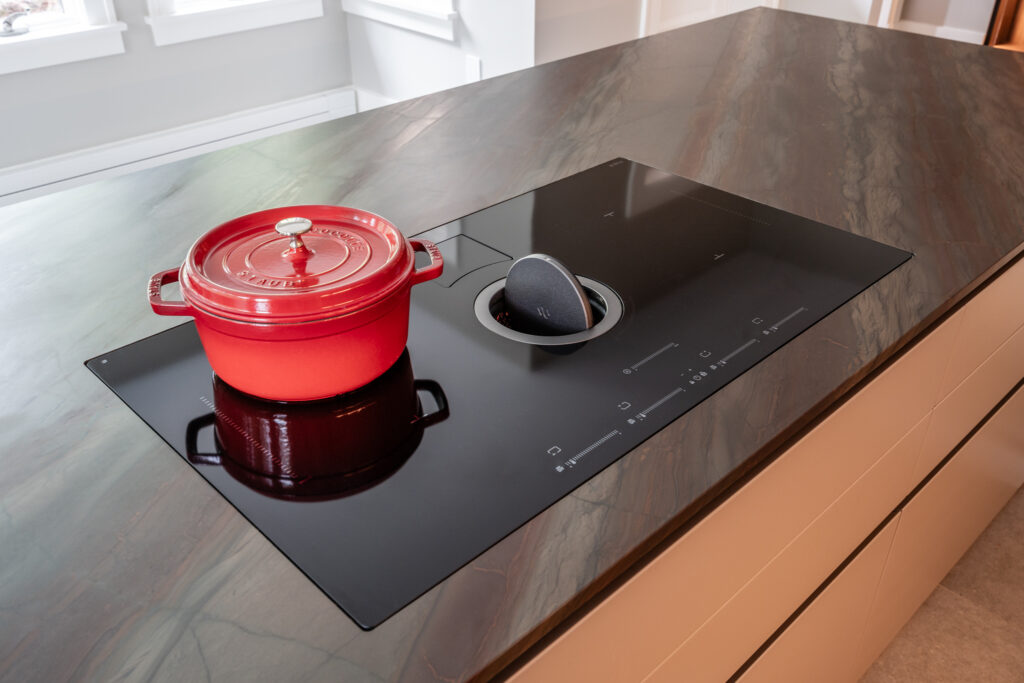
You can also see the beauty of a hidden downdraft in this remodel we did in Maineville, Ohio, where a traditional telescopic downdraft helped us to allow the architectural pendant light to take center stage.
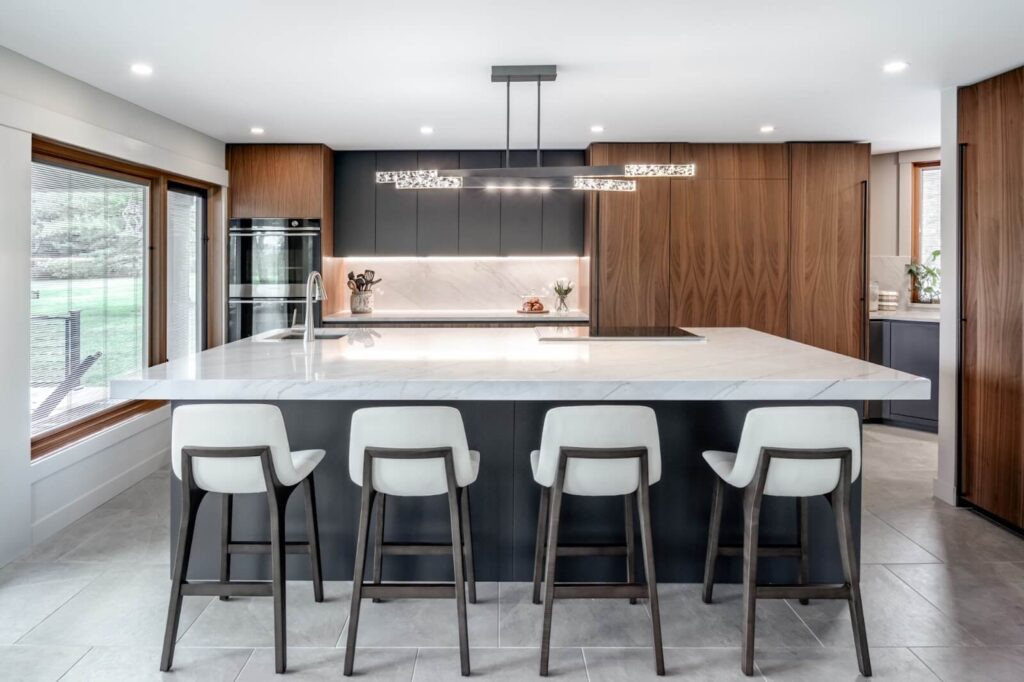
As a rule, if the cooktop is going in the kitchen island, as you see in the example above, a downdraft hood is always the way to go. Another modern design rule to live by? The easier your hood vent is to hide, the happier your modern Italian designer will be — and these remodels made us very, very happy.
Another method for doing hiding your kitchen that we love at NOLI is to blend the hood into the surrounding cabinetry, like what you see here:

This flush-mounted, sleek built-in hood blends in surrounding cabinets, making it both functional and high-design. When it comes to blending your kitchen hood into the countertop, there are two main approaches:
- Designing a separate cooktop and hood that either lifts up mechanically for use and then retracts OR a creating hood cover/top that is flush with the surface and which top cover can be customized with the same material to blend in seamlessly with the surrounding kitchen.
- Creating fixed drafting module(s) typically between cooking elements that has an open grate, or hood integrated with the induction cooktop appliance, typically in its center so aspirated from all sides.
In both cases of updraft vs downdraft, we’re going to create a custom cabinetry or countertop cutouts to hide your hood or conceal your downdraft, like we did for this kitchen in Over The Rhine:
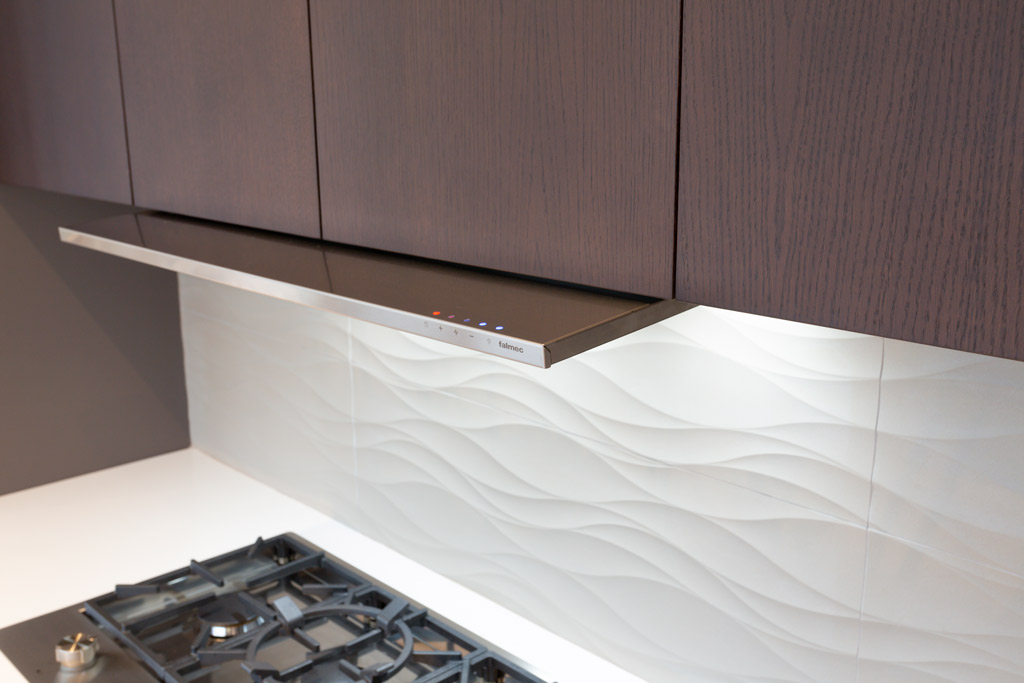
In this case, an updraft hood is preferred for efficiency (though we can always work with a downdraft, too). Here, we used wood to add texture to the otherwise sleek interior of the space to create a seamless look with no hood in sight.
For a totally different (yet still perfectly modern) look, check out this project we took on in Indian Hill, where we used custom cabinetry to add an industrial feel to a kitchen surrounded by natural light and beauty:
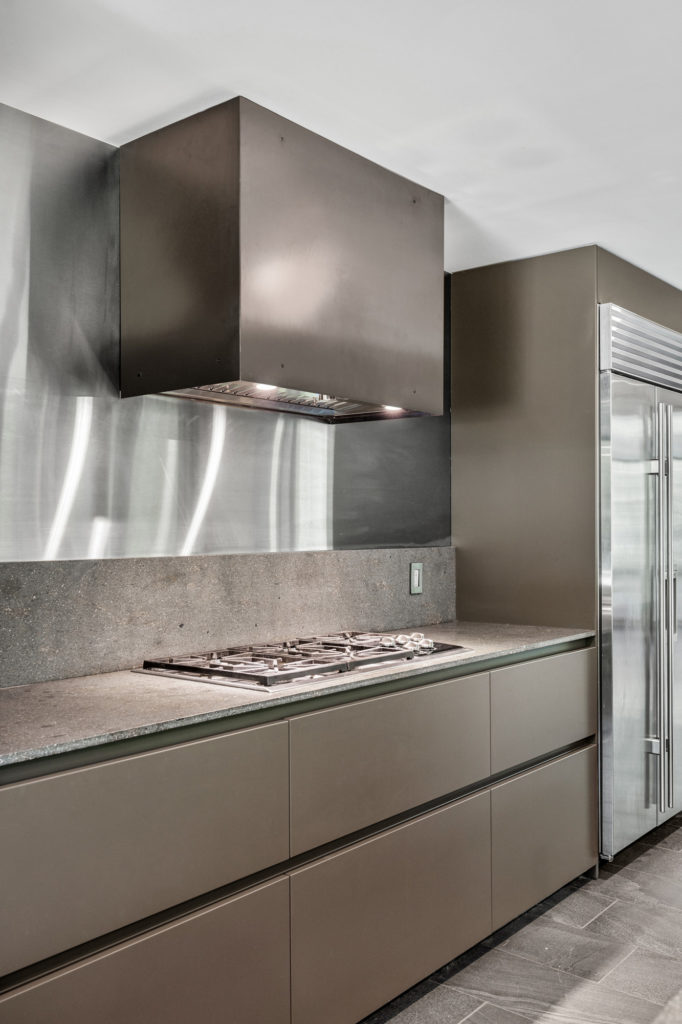
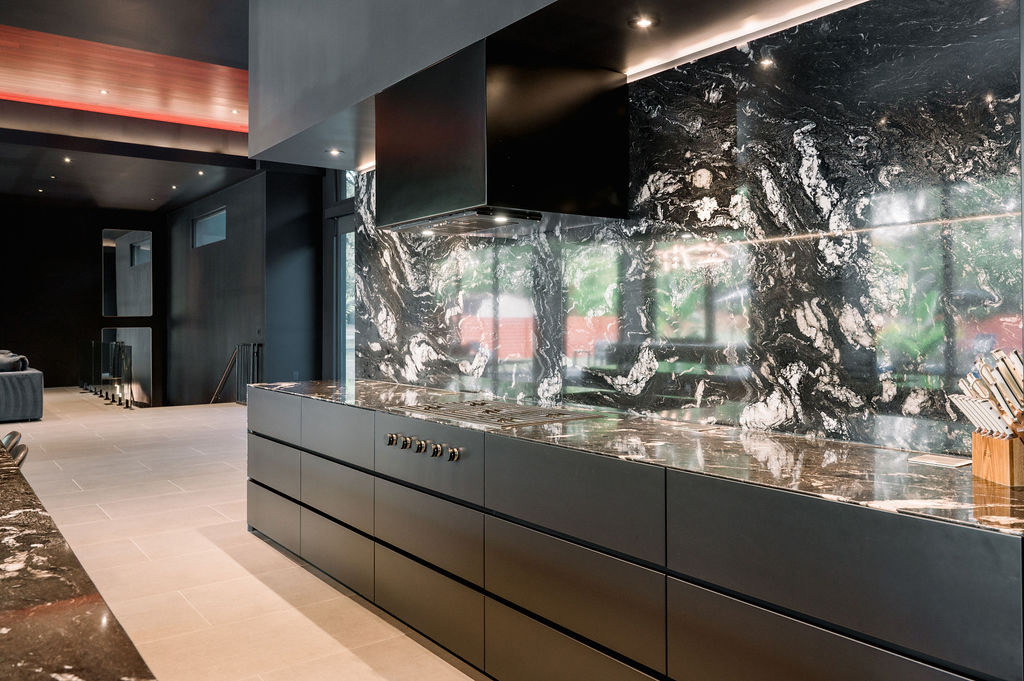
Finally, it’s time to talk about ceiling or soffit mounted hoods, like this one in Mount Adams:
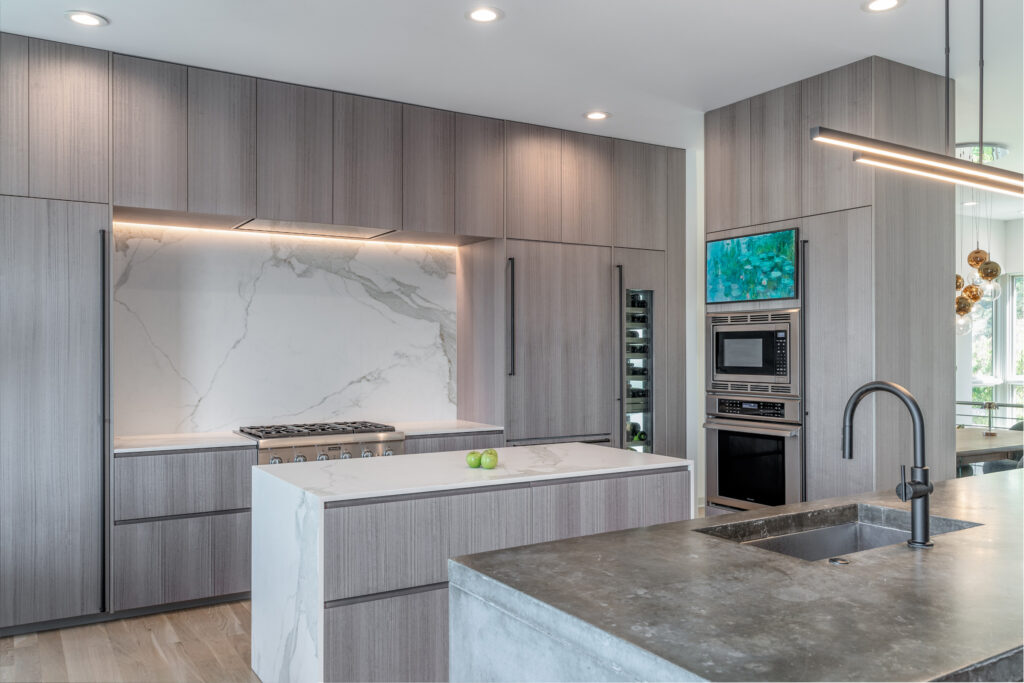
Here, our design goal was to highlight the large, dramatic backsplash. By creating a soffit-like mount, we were able to leave the backsplash untouched. Instead, we used custom cabinetry to conceal the hood in the ceiling as to not take away from the architecture of this modern, sleek home overlooking the city.
As you can see, there are lots of options when it comes to hiding your kitchen hood in a way that still allows it to serve its purpose without overpowering your kitchen.But what if hiding your kitchen hood isn’t an option? Never fear! There are still ways to have a visible hood while maintaining the luxury and style of modern Italian design.
Visible Hood Designs: Form Follows Function
When hiding the hood isn’t an option, form must follow function. (That’s basically the modern Italian designer’s motto – and the de facto of any good designer). That’s where FALMEC hoods come in. These unobtrusive hoods fit seamlessly into your kitchen’s design, while still remaining visible.
Take this example here:
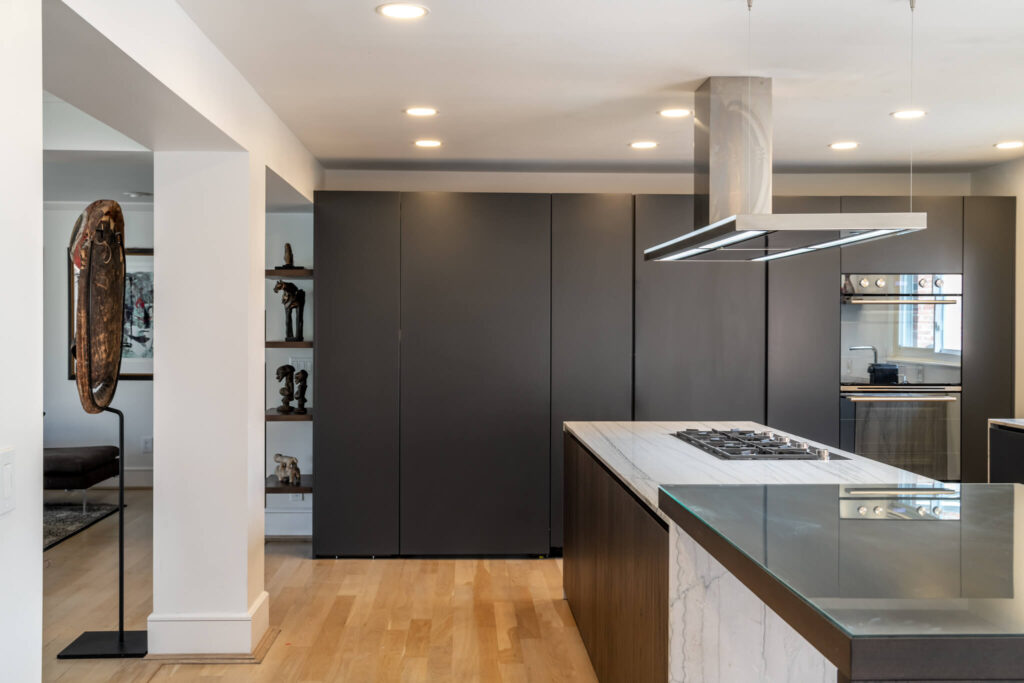
In this project, we used a linear, open and modern suspended hood to provide ventilation and lighting over the island. We wanted to match the monolithic kitchen design with big contrasts.
The hood’s shape blends into the kitchen without blocking the view of the space. It’s a beautiful focal point in the kitchen that doesn’t overcrowd it, which is exactly what we want when using a suspended hood.
Hidden Hoods Are Possible
The good news: ventilating your kitchen without overpowering it with massive, noisy appliances is possible. (We literally just told you how.)
All it takes is a creative, thoughtful design process centered on the multiple ways you can incorporate the modern Italian aesthetic into the style of your kitchen hood – from its placement in your kitchen to the materials used to create it. Modern Italian design means creating spaces where appliances blend into their surroundings in a way that serves the appliance’s function while still maintaining sleek, beautiful design.
Still not sure where to get started? We’re here to help. Use NOLI to design your modern Italian
kitchen with hidden appliances so sleek and understated you’ll almost forget they’re there.
Until it’s time to use them, that is…😉

